01
Anticipate demand.
Use historical port movements and machine learning to inform pilot, tug and mooring requirements.
 Share on LinkedIn
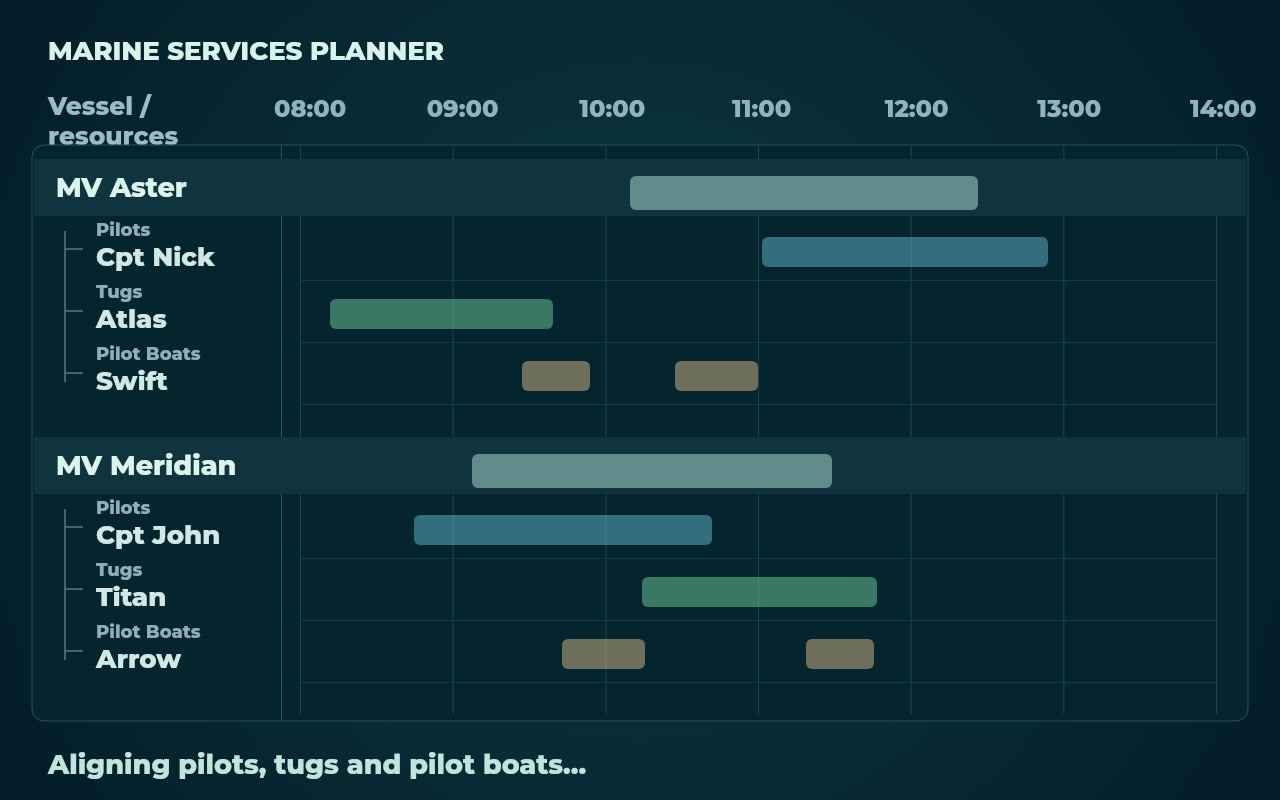
 MARINE SERVICES PLANNER
Bring pilots, tugboats, mooring teams and line boats into one coordinated plan. Turn complex nautical services scheduling into a more responsive port operation.
Use historical port movements and machine learning to inform pilot, tug and mooring requirements.
Balance vessel size, resource availability, pilot logistics, weather and congestion in the schedule.
Adapt resource allocation as needs change, helping reduce idle time, bottlenecks and delays.
Connect marine services planning with marineM Berth Planner to align berth allocations and nautical resource schedules. Streamline coordination between the space a vessel needs and the services that move it.
For example, when a berth window moves later, review the pilot, tug and supporting boat slots needed for the revised movement. A change in tug availability can also prompt a review of berth timing. Marine Services Planner and Berth Planner help teams consider the two plans together.
Explore marineM Berth PlannerOriginal plan
One port call, aligned across both plans.
Coordinate the services behind each arrival and departure.
Plan the resources needed for SPM operations.
Bring complex, multi-stage marine activities into the plan.
Apply AI and optimisation to build marine services schedules around your port’s movement patterns and operational needs.
Bring pilots, tugs, pilot boats, mooring teams and line boats into one plan, with a clear view of the resources behind each vessel movement.
Account for vessel size, pilot logistics, resource availability, weather and congestion when allocating marine resources.
Use historical port movements and machine learning to anticipate pilot, tug and mooring demand, helping teams prepare ahead.
Adapt schedules and resource allocations as operational demand changes, helping reduce idle time, bottlenecks and delays.
Connect with marineM Berth Planner to align berth windows with nautical services, keeping vessel space and service readiness in step.
Marine services planning coordinates the nautical resources needed for vessel movements. marineM Marine Services Planner brings pilots, tugs, pilot boats, mooring teams and line boats into a shared schedule, helping planners see the services behind an arrival, departure or other marine operation.
Marine Services Planner can consider vessel size, resource availability, pilot logistics, weather and congestion. These inputs help planners allocate resources around operational constraints. The specific rules and data sources needed for your port should be reviewed when defining the solution scope.
A changed berth window can alter when pilots, tugs and supporting boats are needed. Marine Services Planner connects with Berth Planner so teams can review berth timing and nautical resource schedules together. Planners can assess the revised requirements and adjust the supporting plan as availability changes.
Yes. The connected planning example shows a later tug slot informing a review of berth timing and the supporting service plan. Looking at resource availability alongside berth windows helps planners consider a workable movement time, rather than treating the two schedules separately.
Marine Services Planner coordinates pilots, tugs and supporting nautical resources. marineM PilotCommand includes add-on modules for Pilotage Orders and Billing that work with Marine Services Planner. marineM TugCommand includes add-on modules for Towage Orders and Billing that work with Marine Services Planner. Together, these support the full workflow from orders and approvals through planning, dispatch, job updates and billing.
Marine Services Planner supports planning resources for Single Point Mooring and Ship-to-Ship transfers, as well as arrivals and departures. Discuss the stages, resource needs and constraints of your operation in a demonstration to establish how the plan should be configured.
See Marine Services Planner in action and explore how it connects nautical services scheduling with marineM PMIS.
Book your marineM demo